Indrajit Paul
Galactic Magnetism · Polarization Studies · Radio Synchrotron
Probing the hidden architecture of cosmic magnetic fields — tracing how magnetism shapes star formation, galaxy evolution, and the large-scale structure of the universe.

About Me
Decoding the magnetic universe, one galaxy at a time.
I am an astrophysicist with a deep focus on the interplay between magnetic fields, polarized radiation, and galactic structure. My research sits at the intersection of observational radio astronomy and computational data analysis.
My primary research interest lies in understanding galactic magnetic fields in nearby galaxies through polarization observations. I develop and apply advanced data reduction pipelines and statistical methods to extract information about ordered and turbulent magnetic field components from radio continuum and polarization data.
I am actively involved in the PASIPHAE survey — a wide-area optical polarization sky survey aimed at mapping the dust-polarization foreground of the Cosmic Microwave Background. I contribute expertise in polarimetric data analysis and point spread function photometry.
Beyond observational work, I employ Bayesian inference and MCMC techniques to model the statistical properties of galactic magnetic fields and constrain their physical parameters from multi-wavelength observations.
Current Affiliation
[Department of Astrophysics, Institution Name]
Research Interests
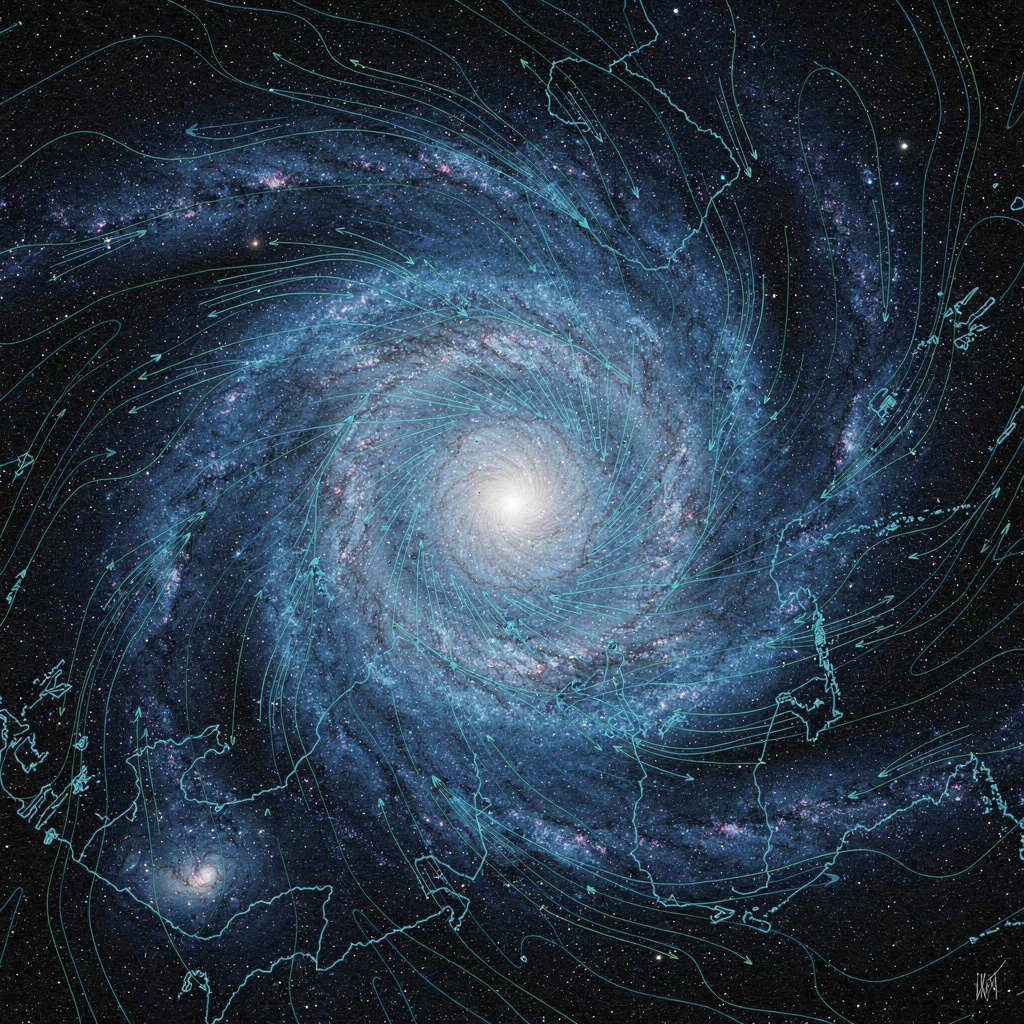
Polarization Observations
Mapping polarized radio emission across nearby galaxies to reveal ordered magnetic structures
Galactic Magnetic Fields
Understanding the origin, amplification, and geometry of magnetic fields on galactic scales
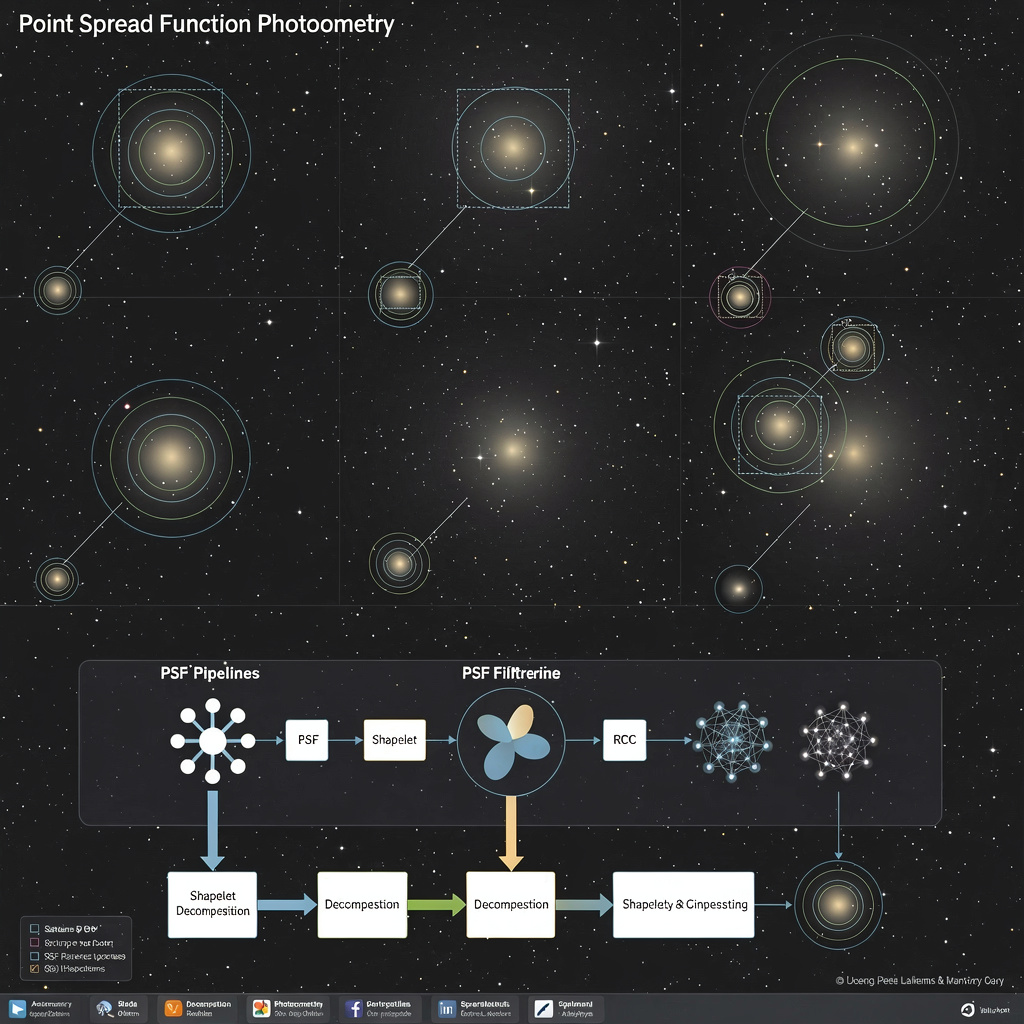
PSF Photometry
Precision stellar photometry using point spread function modeling and shapelet decomposition
Fourier Mode Analysis
Characterizing galactic structure through Fourier decomposition of intensity and polarization maps
Radio Synchrotron Studies
Analyzing non-thermal radio continuum emission as a tracer of cosmic-ray electrons and magnetic fields
Bayesian & MCMC Methods
Statistical inference and uncertainty quantification in astrophysical models
Research
Current Research Directions
My work spans observational radio astronomy, precision photometry, and computational statistics — united by the quest to understand cosmic magnetism.
Publications
Selected Works
Magnetic Field Morphology in NGC 6946: A Faraday Rotation Measure Synthesis StudyFeatured
Paul, I., et al.
PASIPHAE PSF Photometry Pipeline: Shapelet-Based Stellar Polarimetry for Wide-Field SurveysFeatured
Paul, I., Tassis, K., et al.
Polarimetric Properties of the M31 Radio Halo at 1.4 GHz
Paul, I., et al.
Bayesian Estimation of Large-Scale Ordered Magnetic Field Strength from Synchrotron Observations
Paul, I., Collaborators
Fourier Mode Analysis of Polarized Intensity Maps in Nearby Spiral Galaxies
Paul, I., et al.
Projects & Collaborations
Active Research Programs
PASIPHAE Survey
POlarized light from Stars and the Interstellar medium to Probe High-Altitude atmospheric Effects
Collaborator — PSF Photometry & Polarimetric Pipeline
PASIPHAE is an ambitious optical polarimetric sky survey aimed at mapping the polarization of millions of stars. The primary scientific goal is to characterize the Galactic dust polarization foreground of the Cosmic Microwave Background B-mode signal. I contribute precision PSF photometry methods and pipeline development.
Radio Observations of M31
Magnetic Field Structure in the Andromeda Galaxy
Principal Investigator / Lead Researcher
A dedicated multi-frequency radio polarimetry program targeting M31 (Andromeda), the nearest large spiral galaxy. Using observations from major radio facilities, we map the ordered and turbulent magnetic field components of M31's disk and halo, comparing them with star-formation tracers and Faraday rotation data.
Magnetic Field Modeling
Bayesian Parametric Models of Galactic Magnetic Geometry
Lead — Statistical Modeling & MCMC Inference
Development of parametric Bayesian models for the large-scale ordered magnetic field geometry of spiral galaxies. MCMC sampling is used to constrain pitch angles, field strengths, and reversals, enabling comparison across galaxy types and environments. Results inform models of cosmic-ray transport and galaxy evolution.
Teaching & Mentorship
Education & Community
2022 – 2024
Graduate Teaching Assistant
Observational Astrophysics (Graduate Level)
Led weekly problem sessions, developed tutorial materials on radio data reduction, and supervised student observing projects using telescope time.
2023 – Present
Undergraduate Mentor
BSc Research Project Supervision
Supervised two undergraduate thesis projects in radio polarimetry and data pipeline development. Provided regular one-on-one mentoring on scientific methods and academic writing.
2022
Workshop Instructor
Python for Astronomers — Scientific Computing
Delivered a two-day hands-on workshop on Python-based astronomical data analysis, covering astropy, emcee (MCMC), and polarimetric data handling for early-career researchers.
Curriculum Vitae
Academic Journey
Education & Positions
2024 – Present
Postdoctoral Researcher
[Institution Name]
Research focus on galactic magnetic fields, PASIPHAE pipeline development, and Bayesian modeling of polarization data.
2020 – 2024
Ph.D. in Astrophysics
[University Name]
Dissertation: "Magnetic Fields and Polarized Emission in Nearby Galaxies: Observational and Statistical Approaches"
2018 – 2020
M.Sc. in Physics (Astrophysics)
[University Name]
Specialization in radio astronomy and observational methods. Thesis on synchrotron emission from NGC 5236.
2015 – 2018
B.Sc. in Physics (Honours)
[University Name]
Foundation in theoretical and experimental physics, mathematics, and computational methods.
Skills & Expertise
Observational
Computational
Methodology
Facilities
Get in Touch
Let's Connect
Open to research collaborations, academic inquiries, and conference invitations. Feel free to reach out via any of the channels below.